



News
Small Flat Marker Production
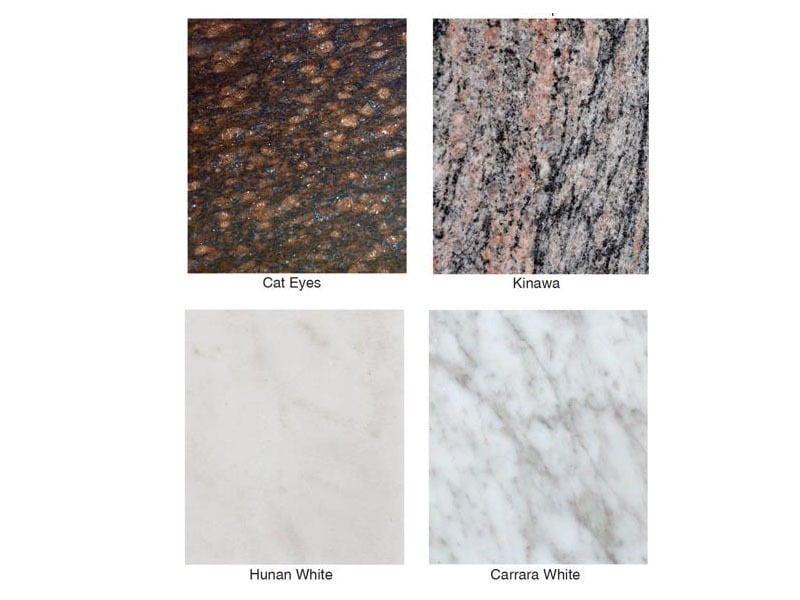
Overseas buyers sourcing flat grave markers require reliable manufacturing information to assess suppliers and ensure consistent product quality. Production begins with raw material selection: quarried granite varieties such as black (absolute), gray (G664, G603), and red granites are chosen for their density, low porosity, and long-term weather resistance. Suppliers typically grade blocks by visual inspection and laboratory testing for water absorption and compressive strength to reduce the risk of cracking or discoloration after cutting and finishing.
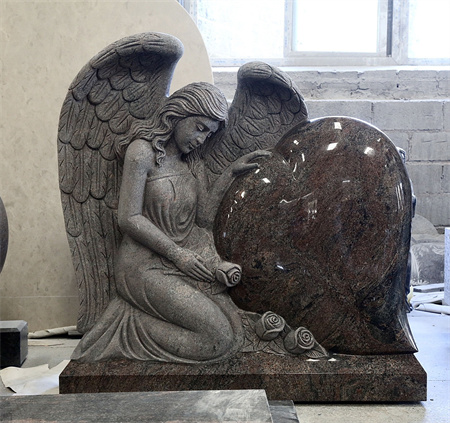
Primary fabrication starts with block sawing and slab squaring using diamond gang saws or wire saws to achieve flatness and consistent thickness. For small flat markers, common thicknesses range from 25 mm to 50 mm (1–2 inches) for lawn-level memorials, with thicker options offered for durability or regional standards. CNC bridge saws and routers are used to cut exact dimensions and to profile edges—bevels, ogee, or radius corners—ensuring uniformity across production batches. Dimensional tolerances are typically maintained within 1–3 mm depending on part size and customer requirements.
Surface finishing and inscription are critical for both aesthetics and longevity. Polishing, honing, or sandblasting are applied according to the design specification; sandblasted lettering with paint or epoxy fill remains the industry standard for legibility and wear resistance. Laser etching and sandcarving technology allow for high-detail portraits or emblems, while CNC routers ensure repeatable inscription depth and font fidelity. For bronze plaques or emblems, mechanical fixing points and stainless steel anchors are often pre-drilled and tested for pull-out strength to meet installation standards in export markets.
Customization is a key consideration for wholesalers and distributors. OEM options include cut-to-size markers, custom lettering and logos, multi-language engraving, inlaid emblems, chamfered edges, and special coating treatments such as hydrophobic sealants or anti-graffiti layers. Suppliers should provide digital proofs and, when required, physical samples or prototypes for approval. Minimum order quantities vary by factory but many manufacturers accommodate mixed-style LCL (less-than-container load) orders for smaller buyers while offering FCL (full container load) pricing advantages for larger distributors.
Quality control is integrated throughout the production cycle. Incoming stone inspection, dimensional verification after cutting, surface finish checks, and final inscription audits are standard procedures. Laboratories or third-party inspectors can perform freeze-thaw resistance and tensile strength tests where climate-specific performance is a concern. Many export-oriented manufacturers maintain ISO 9001 quality systems and keep documented inspection reports, batch traceability, and photographic QC records available for buyer review.
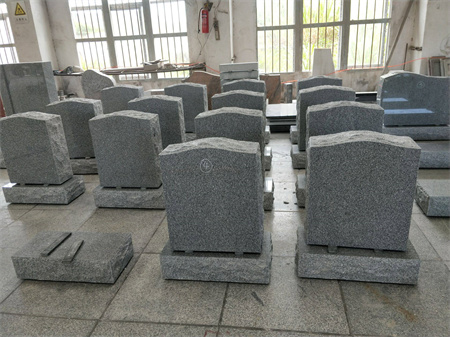
Preparing flat markers for international shipping requires careful packaging and documentation to prevent damage and clear customs efficiently. Products are commonly packed with foam, corrugated sheets, and wrapped in acid-free paper, then secured in fumigated and ISPM 15-compliant wooden crates or plywood pallets. Desiccant packs and moisture barriers are used for long voyages. Export logistics include arranging FCL or LCL containerization, securing goods against movement, and providing essential documents such as commercial invoices, packing lists, bills of lading, and certificates of origin. Lead times depend on order size, customization complexity, and shipping mode; typical production runs range from several weeks to a few months, not including transit time.

For importers and funeral supply companies, evaluating suppliers on material provenance, fabrication capabilities, customization options, QC procedures, and packaging standards will support more predictable procurement. A clear specification sheet and mutually agreed inspection criteria help align expectations and reduce disputes during cross-border transactions.
 Chaole industrial district ,Chongwu town,Huian,Fujian,362131,China


If you want to know more about our products designs
and get the best quotation, please don't hesitate to send a subscription
email,thank you!
Copyright © Huian Boda Stone Co.,Ltd All rights reserved.

ipv6 network supported


