



News
Christian Cross Headstones Wholesale
Manufacturers supplying cross-shaped granite memorials to international buyers must combine consistent production practices with rigorous quality assurance to meet the expectations of importers, wholesalers, distributors, and funeral supply companies. Understanding the core steps in manufacturing, material selection, customization options, and logistics is essential for establishing reliable supply relationships.
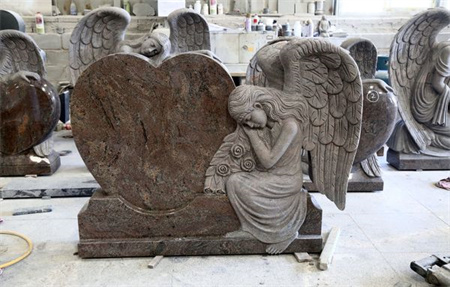
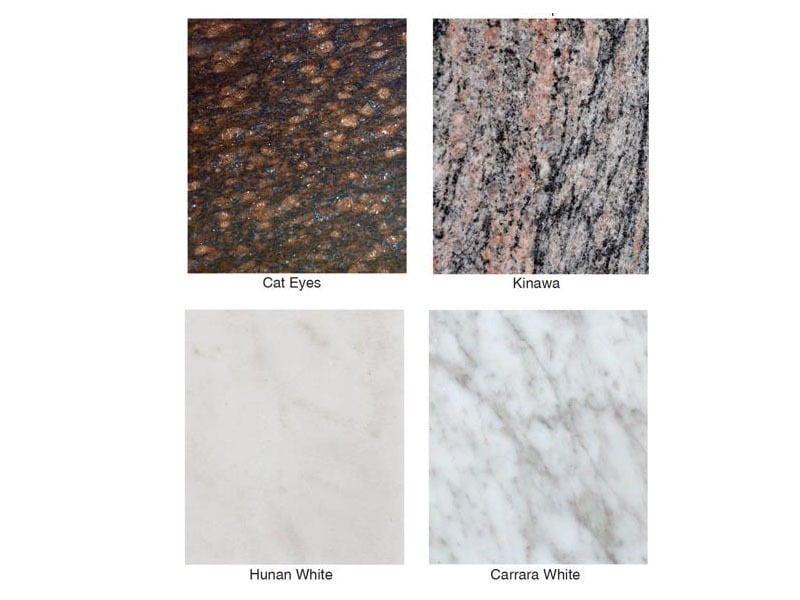
Raw material selection begins with sourcing suitable granite blocks and slabs. Common commercial granite grades used for grave markers and headstones include light-coloured stones such as G603 and G617, medium tones like G654, and dark varieties including absolute black and G351. The choice of granite affects durability, polishability, and suitability for fine detail work. Stone suppliers typically provide block certificates and batch photos so buyers can verify colour consistency and veining prior to production.
The manufacturing process for cross headstones typically involves CAD drawing approval, dimensioning, and template verification. Cutting is performed with diamond wire saws or gang saws to produce blanks, followed by CNC carving for precise contours and milling of bases. Surface finishing is achieved through progressive grinding and polishing stages to specified gloss levels. Lettering and ornamentation are applied using sandblasting or laser etching; sandblasting remains standard for deep, durable inscriptions, while laser etching offers high-resolution grayscale images on darker granites. Skilled hand-finishing is often used for detailed reliefs and to ensure edge integrity.
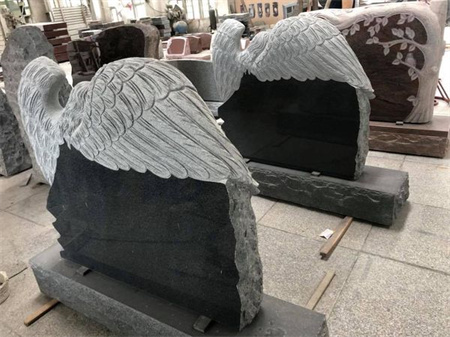
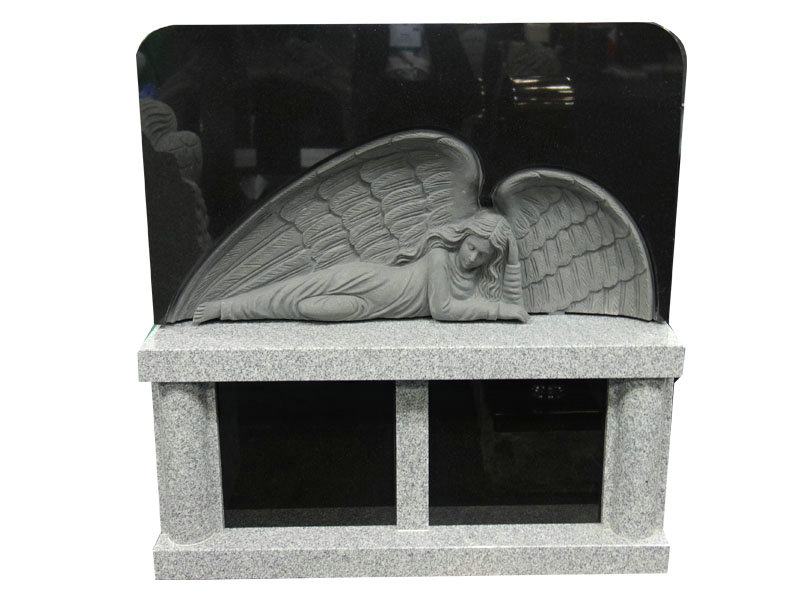
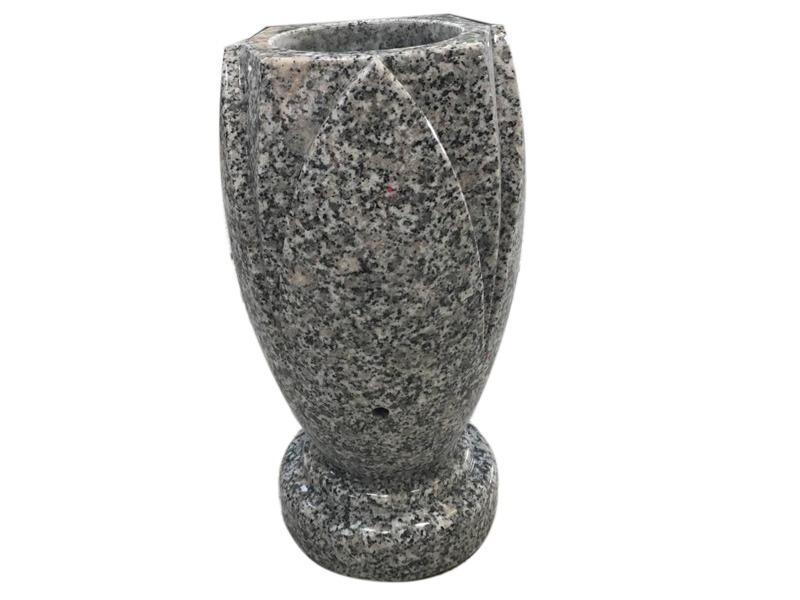
Customization options are a key consideration for international buyers. Manufacturers commonly offer variations in dimensions, thickness, base configuration, and foundation fixings to meet cemetery regulations and market preferences. Add-ons such as bronze plaques, ceramic portrait inserts, metal vases, and epitaph styles are integrated during production. Buyers should request prototypes or samples and confirm vector artwork for logos, religious symbols, or specific font treatments to prevent discrepancies.
Quality control protocols are essential to minimize defects and rejection at arrival. In-process inspections include dimensional checks against CAD drawings, gloss meter readings for polished surfaces, and verification of inscription depth for legibility. Final inspections examine edge profiles, surface blemishes, hairline fissures, and sealing where required. Many factories maintain third-party certifications such as ISO 9001 and can accommodate SGS or Bureau Veritas inspections on request. Pre-shipment samples and digital reports with high-resolution photos help streamline acceptance by overseas partners.
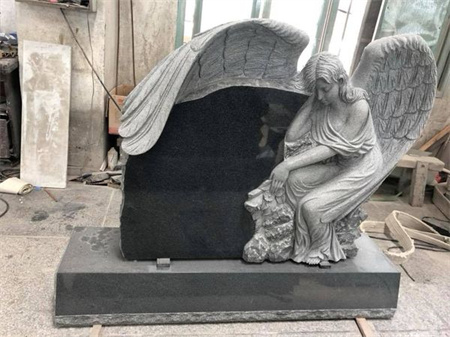
International shipping requires careful packaging and documentation to protect heavy, fragile products and clear customs efficiently. Standard packing includes foam interlayers, corner protection, and secured positioning inside wooden crates or on pallets. Because wooden packaging may be subject to phytosanitary regulations, suppliers often use ISPM 15-compliant timber or fumigation-treated crates; alternatives include plywood or steel frames for markets with strict regulations. Containers are loaded to optimize weight distribution and prevent movement; common methods include FCL (full container load) and LCL (less than container load) depending on order size. Essential export documents include commercial invoices, packing lists, Bill of Lading, certificate of origin, and HS code classification (commonly 6802 for worked monumental stone). Trade terms such as FOB, CIF, or DDP should be agreed upon to clarify responsibilities.
Lead times and minimum order quantities vary by factory capacity and customization complexity; buyers should confirm production schedules, sample approval timelines, and contingency plans for seasonal demand. Transparent communication regarding guarantees, return policies, and after-sales support reduces risk in cross-border transactions.
In conclusion, successful sourcing of cross-shaped granite memorials hinges on careful material selection, precise manufacturing practices, robust quality control, and competent international logistics. Clear specifications and collaborative planning with suppliers help ensure consistent product quality and on-time delivery for wholesale and distribution channels.
 Chaole industrial district ,Chongwu town,Huian,Fujian,362131,China


If you want to know more about our products designs
and get the best quotation, please don't hesitate to send a subscription
email,thank you!
Copyright © Huian Boda Stone Co.,Ltd All rights reserved.

ipv6 network supported


