



News
How Currency Exchange Rates Affect Your Stone Purchasing Power
For overseas monument importers, wholesalers, distributors, and funeral supply companies, movements in currency exchange rates are a critical factor that directly affects stone purchasing power. Whether buying granite slabs for headstones, finished tombstones, or custom monument components, the relationship between your home currency and the supplier’s currency will influence landed cost, margins, and the range of materials and customization you can economically offer.
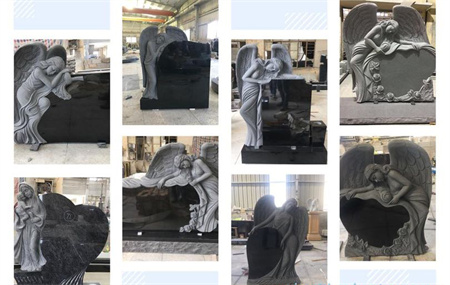
At the manufacturing level, most granite quarries and stone processing factories price raw blocks, cutting, and basic finishing in local currency. A depreciation of the supplier’s currency can lower the price per slab and make premium granite grades and thicker slabs more accessible without altering supplier margins. Conversely, appreciation of the supplier’s currency increases the cost of the same granite, potentially forcing buyers to accept lower-quality granite, reduced personalization, or higher minimum order quantities to achieve acceptable unit economics. Labor-intensive customization such as hand-carved motifs, sandblasting, etching, and complex polishing profiles is particularly sensitive to exchange-rate changes because these operations are charged in local rates and account for a substantial portion of the value added.
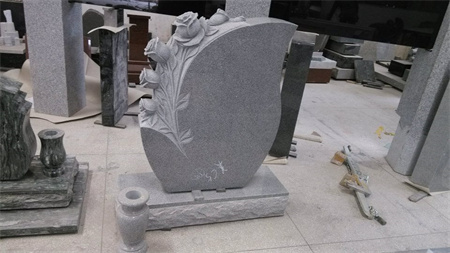
International shipping costs and global freight markets also interact with exchange rates to change the effective price of monuments and gravestones. Although ocean freight and container rates are often denominated in US dollars, port handling, inland trucking, and fuel surcharges may be billed in local currencies at origin and destination. A weaker home currency raises the cost of these services when converted, while a weaker supplier currency can reduce the supplier’s local logistics expenses. Import duties, VAT, and brokerage fees are typically assessed in the import country’s currency and therefore become more expensive when that currency weakens. Understanding incoterms such as EXW, FOB, and CIF is essential because the party responsible for freight and insurance and the currency used for those charges will determine how much exchange-rate volatility affects the buyer’s landed cost.
Quality control considerations become more prominent when exchange rate movements prompt buyers to seek cost savings. Cutting corners on inspection, accepting lower-grade granite, or limiting sample approvals may initially reduce unit costs but increase rejects, returns, and reputational risk. Many buyers mitigate this by retaining third-party inspection services, stipulating detailed material specifications (porosity, density, polish retention), and establishing clear acceptance criteria for customized engraving and finishing. Pre-shipment samples, photographic documentation, and factory audits help preserve consistent headstone and mausoleum quality even as pricing pressures mount.
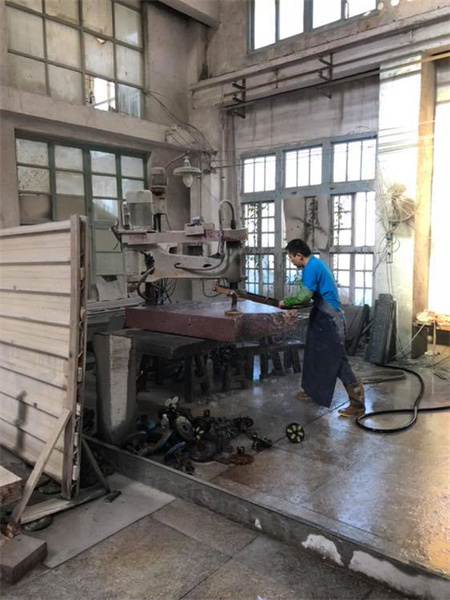
Financial and commercial strategies can reduce exposure to exchange-rate volatility. Agreeing on invoicing currency, using forward contracts or simple hedging tools, and negotiating payment terms such as LC vs. TT can stabilize costs. Suppliers and buyers may also include price escalation clauses tied to a currency index or commodity cost, or they may set periodic price reviews. Operational approaches — consolidating orders to reduce per-unit freight, using bonded warehousing, and optimizing lead times — also help manage the impact of rate fluctuations on inventory carrying costs and cash flow.
Careful planning that integrates manufacturing realities, material selection, customization needs, robust quality control, and international shipping terms enables monument importers and distributors to manage the effect of currency exchange rates on their stone purchasing power. Buyers who combine contractual tools with operational adjustments can maintain product quality and predictable margins despite currency volatility.
 Chaole industrial district ,Chongwu town,Huian,Fujian,362131,China


If you want to know more about our products designs
and get the best quotation, please don't hesitate to send a subscription
email,thank you!
Copyright © Huian Boda Stone Co.,Ltd All rights reserved.

ipv6 network supported


