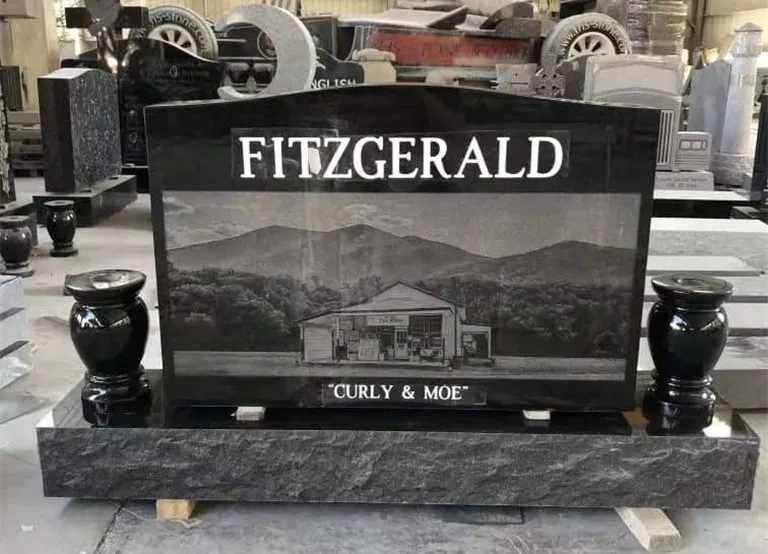
Laser etching is often used for portraits and fine images. Sandblasting is commonly used for deeper lettering and cut-out designs. A monument can use both. Choose according to the image or inscription you want, and approve a sample on the selected granite before committing an unfamiliar design to production.
Method comparison
| Requirement | Laser etching | Sandblasting |
|---|---|---|
| Photographic tones | Often suitable after image preparation | Limited tonal range |
| Deep lettering | Normally not the primary method | Commonly suitable |
| Material test | Confirms contrast and detail | Confirms depth, edge and color fill |
| Inspection | Banding, placement and tonal loss | Depth, edge definition and stencil accuracy |
What to check before production
- Final artwork, spelling, dates and line breaks.
- Representative current-batch stone sample.
- Defined depth or sample-based contrast criteria.
- Agreed color fill and cleaning method where used.
- Protection of the completed face in packing.
Do not ignore process safety
Sandblasting, cutting and cleaning can involve dust exposure, while laser systems involve beam and non-beam hazards. Relevant workplace controls should form part of a responsible supplier review.
Frequently Asked Questions
Which method lasts longer?
Durability depends on stone, depth, finish, exposure and maintenance; compare the approved method for the application.
Can both methods be used on one monument?
Yes. A design may use sandblasted lettering with a laser-etched image.
Which is cheaper?
Cost depends on artwork, size, preparation, material and quantity; request the actual drawing scope.
Sources and further reading
- OSHA — Laser Hazards: U.S. beam and non-beam hazard guidance; local requirements must be checked separately.
- OSHA — Crystalline Silica: U.S. workplace-hazard context; not a certification of any workshop.
Updated October 5, 2026. Check the current requirements for your destination and order.