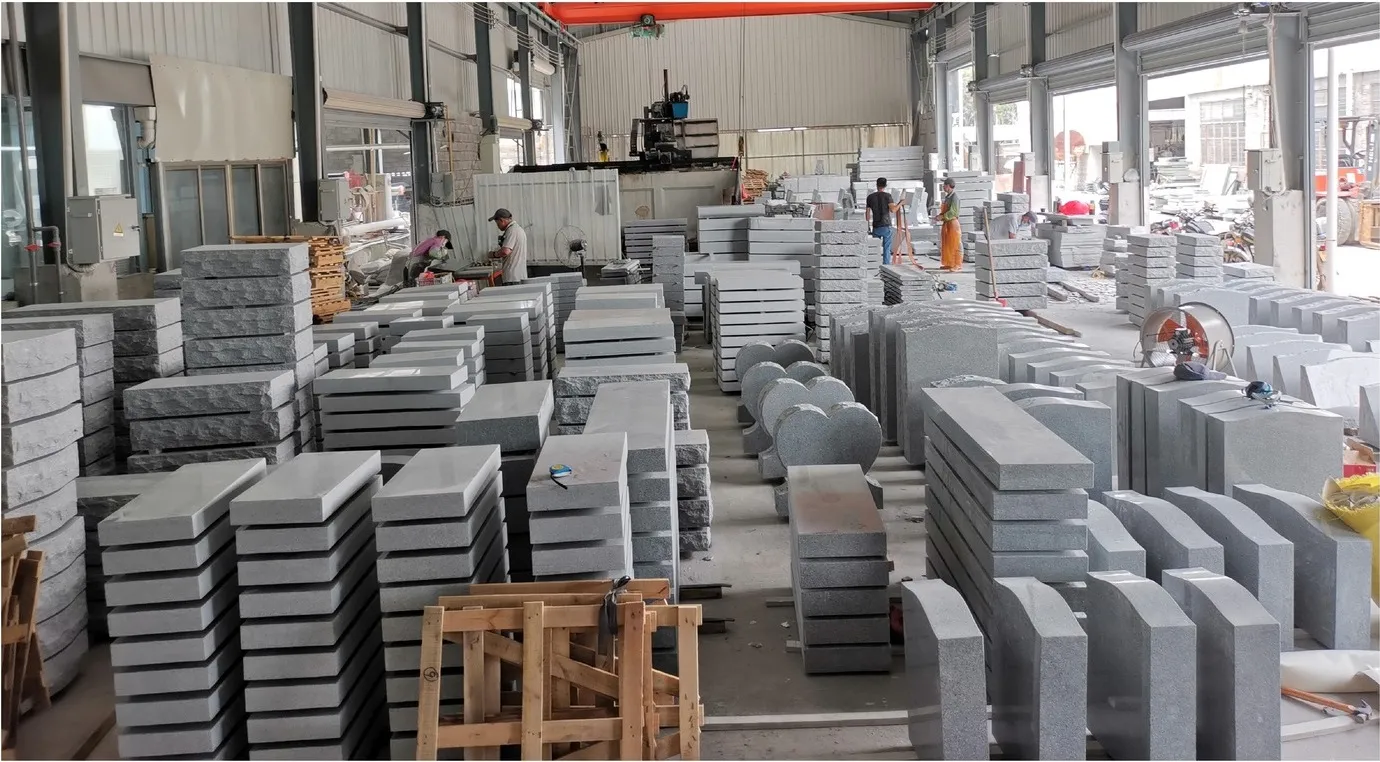
A direct factory order can suit planned stock and repeat designs. A local wholesaler may be more convenient for urgent orders or a few pieces. Compare the total cost to your yard, the work your team must handle and how replacements will be arranged—not just the price of the stone.
Which buying route fits your order?
| Factor | Direct factory | Local wholesaler |
|---|---|---|
| Specification control | Direct drawing and production communication | Depends on the wholesaler's supplier controls |
| Order size and inventory | May require consolidated production and import planning | Often supports smaller local replenishment |
| Logistics and customs | Buyer manages or appoints specialists | Usually included in local supply scope |
| Claims and replacement | Handled under the international contract | Handled under local commercial terms |
Compare the full cost of getting the order to your yard
Use the same drawing, material, finish and packing scope. Add current freight, customs, inspection, inventory financing, local delivery and exception costs. Do not compare a factory-only quotation with a delivered local price.
When a mixed model works
Some buyers source repeatable inventory directly and use local wholesalers for urgent, small or unusual orders. The right division depends on demand predictability, storage, cash flow and technical capability.
Send the same order details with each quote request
A factory quotation should not be compared with a local delivered price until the included items and services match. Give both channels the same product schedule and then record which party owns each cost, document and exception.
| RFQ field | What to keep identical | What to compare separately |
|---|---|---|
| Product specification | Model, dimensions, stone, finish, artwork, accessories and quantity | Drawing revisions, sample or first-piece approval |
| Delivery scope | Destination country and port, requested date and shipping mode | Current freight, customs, local delivery and broker fees |
| Protection and claims | Crate, marks, inspection and photo evidence | Insurance, damage notice deadline and replacement responsibility |
| Commercial terms | Currency, payment milestones and quotation validity | Inventory carrying cost, urgent replenishment and service fees |
What to ask before your first order
Before a first order, an importer can request evidence proportionate to the order risk: the legal supplier identity, a live or recorded workshop view, a representative material sample, drawing and artwork controls, a written inspection or photo checkpoint, and a packing and shipping plan. The purpose is to verify the promised process, not to collect marketing claims. Payment beneficiary changes should be independently verified.
Is direct import a good fit for your business?
Send the same RFQ to our team with your customer role, country and port, product schedule, quantities, stone and finish, packing, delivery term, target date, inspection needs and expected replenishment pattern. We will identify which assumptions require a separate local or logistics confirmation.
Frequently Asked Questions
Is buying direct always cheaper?
No. Unit price does not include every logistics, inventory, inspection and exception cost.
Does a local wholesaler provide better quality?
Quality depends on the specification and control system, not the sales channel alone.
What should first-time importers test?
Start with identity checks, drawings, a representative sample or trial, inspection photos and measurements and packing scope.
Sources and further reading
- U.S. International Trade Administration — Due Diligence: General partner-review guidance, not a finding about a named supplier.
- ICC — Incoterms rules: Delivery responsibilities, costs and risks; Incoterms 2020 remains the current edition listed by ICC.
Updated October 5, 2026. Check the current requirements for your destination and order.