Start with the models you need, the quantity of each and the delivery destination. Then agree on the quote, drawings, stone sample and checks before production. Plan freight, import clearance and unloading with your local partners. The steps below explain what to prepare and what to approve along the way.
Questions to settle before asking for a quote
Mixed loading: Confirm the model mix, component pairing, crate layout, gross weight and unloading sequence for the actual order. Do not use a fixed container piece count copied from another shipment.
FCL/LCL and insurance: FCL normally gives the buyer one planned loading system; LCL or consolidation can add handling and transfer points. The contract and named Incoterm determine who arranges cargo insurance and who files a claim. Keep the crate, packing list, transport documents and arrival photographs until the carrier, broker and insurer have reviewed the event.
Who handles what at the destination?
The factory can prepare the agreed product and export documents. The buyer, local broker, carrier and cemetery or installer must confirm destination-specific rules before the order is released.
| Market | Buyer-side confirmation before shipment |
|---|---|
| United States | Importer or broker confirms classification, duties, entry documents, wood packaging rules and cemetery or installer requirements. |
| Canada | Importer or broker confirms tariff treatment, taxes, port and inland delivery, wood packaging and local cemetery dimensions. |
| United Kingdom | Importer or broker confirms customs, VAT, delivery term, wood packaging and the cemetery or council approval path. |
| European Union | Importer or broker confirms the destination member state, customs and VAT treatment, delivery scope and local installation rules. |
| Australia | Importer or broker confirms biosecurity, wood packaging, entry documents, destination charges and cemetery or installer requirements. |
| New Zealand | Importer or broker confirms biosecurity, wood packaging, entry documents, destination charges and cemetery or installer requirements. |
These are responsibility prompts, not fixed legal or tax advice. Current official rules and the named shipment terms control each order.
1. Prepare a clear project brief
North American monument businesses often combine retail design, cemetery coordination, installation and family service. An overseas factory normally receives only the production portion of that chain. The buyer therefore needs to translate the local order into a file the factory can manufacture without guessing.
For each item, state the die, base, marker, vase, sub-base or other component separately. Include overall and component dimensions, visible and hidden finishes, granite name and acceptable color range, edge profiles, holes, dowels, panel layout, carving or etching scope, lettering responsibility and packing marks. Attach the cemetery rule or approved permit drawing when it affects the design.
2. Choose a supplier who understands your products
Start with a few models you buy regularly. Ask the supplier to explain how they would make them, which drawings they need and how they will check the finished pieces. You can also arrange a workshop visit or video call to see relevant work and meet your contact.
Confirm who will handle production, drawings and any issues with the order. Before paying, check that the company and payment details match the agreed documents. If bank details change, confirm the change through a contact you already know.
3. Compare quotes for the same order
| Quote item | What the buyer should see | Common source of mismatch |
|---|---|---|
| Product | Components, dimensions, granite and finishes | A photo is quoted without a approved drawing |
| Decoration | Carving, etching, lettering, colorfill and accessories | Retail lettering work is confused with factory work |
| Quantity | Per design, per color and total order quantity | Mixed items are priced as if they were identical |
| Packing | Crate type, labels, protection and packing list | Export packing is described only as "wooden crate" |
| Delivery | Named Incoterm, named place and included charges | A delivery term is written without the required named place or port |
4. Approve the drawing and material before cutting
The factory CAD drawing should show the geometry needed for production and installation: height, width, thickness, top profile, base margins, joint locations, holes, vase positions, polished faces and special tolerances. Complex sets should include a component schedule or exploded view. The buyer should return one clearly marked approved version and keep it with the purchase order.
For granite, agree how color and natural variation will be judged. A named color is not always enough because commercial names can be used inconsistently. Depending on the program, approved drawings, samples and photos may include a retained physical sample, current lot photographs, slab photographs or a first-piece photograph under neutral lighting.

5. Agree when to check the work
Agree on checks at the stages that matter for your design: stone selection, cutting, finish, lettering and packing. For a multi-part monument, include a trial fit where needed. Ask for photos and measurements marked with the order or drawing number, so you can tell which pieces you are looking at.
When a dimension or appearance does not match the approval, require a written decision before packing. The decision may be rework, replacement or buyer acceptance of a documented deviation. This is easier when the purchase order already defines who can approve changes.
6. Plan packing and shipment as part of the product
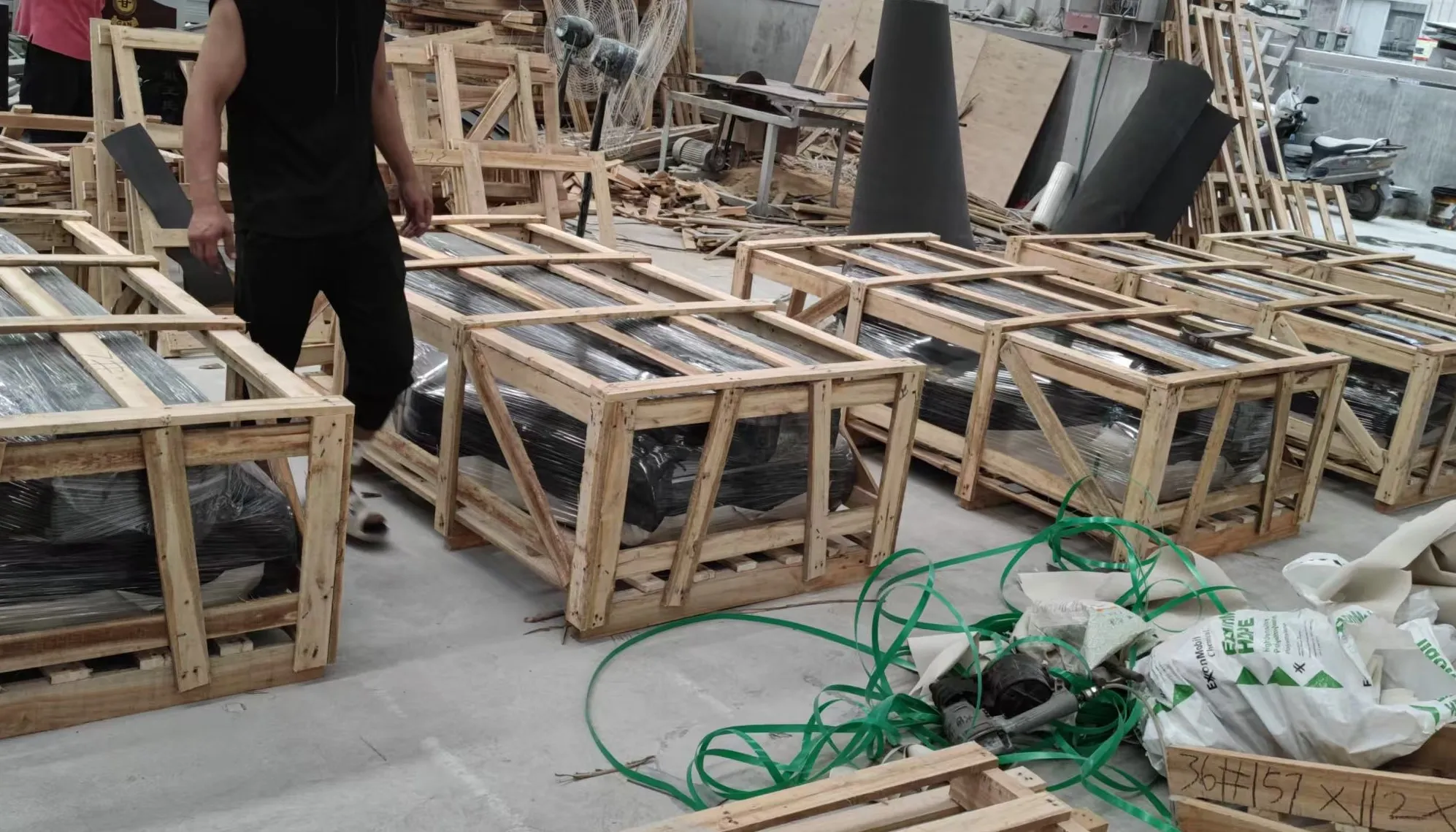
Heavy polished stone needs non-abrasive separation, protected edges, restrained components and a crate structure designed for the item and handling route. Request a crate map when several customer orders or monument sets share a container. Each crate should carry a mark that connects it to the packing list without exposing private family information unnecessarily.
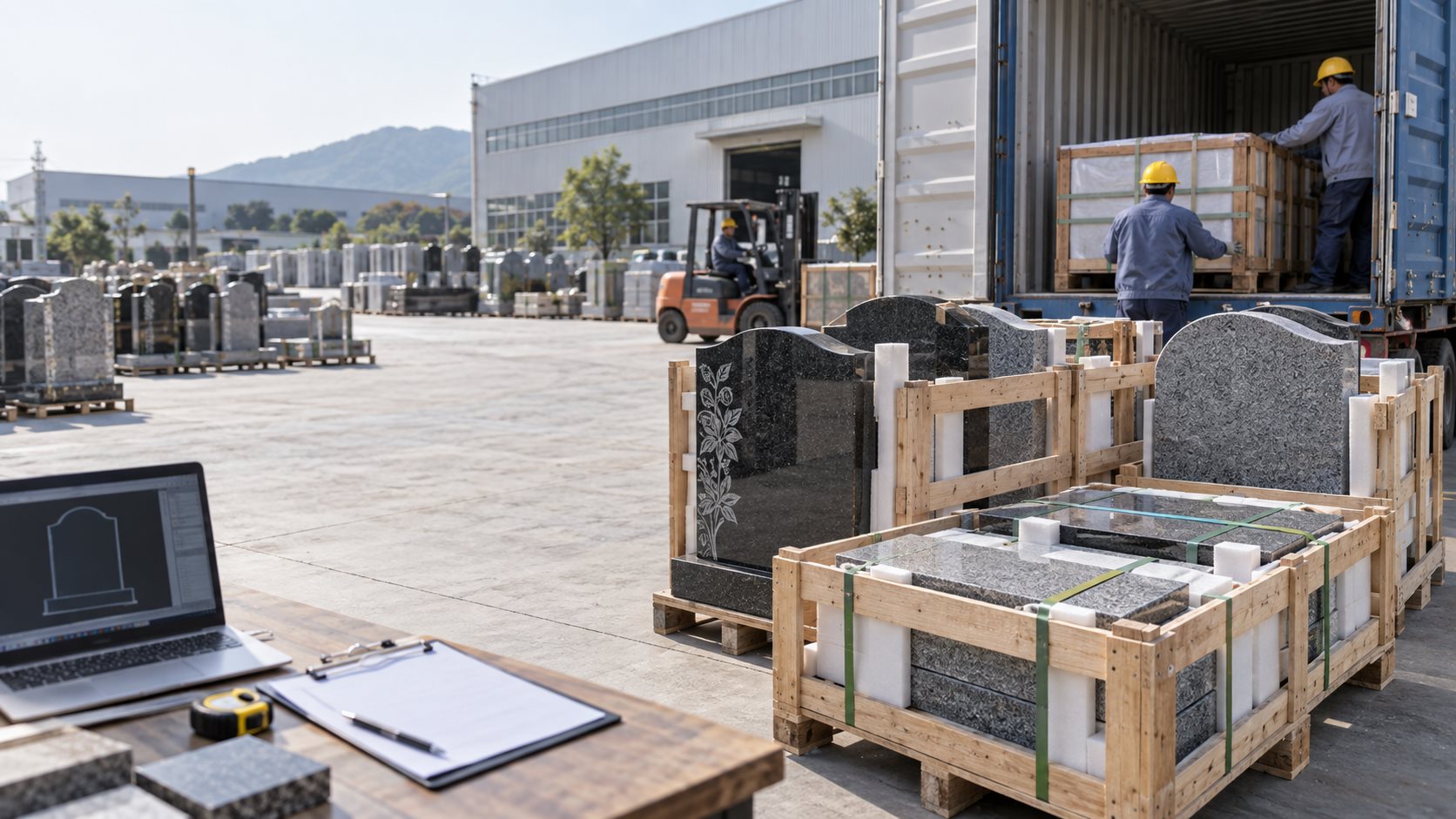
Before shipment, reconcile the commercial invoice, packing list, crate count, gross and net weights, marks, bill of lading instructions and any required origin or treatment documents. For U.S.-bound shipments using regulated solid wood packaging, the importer should confirm current ISPM 15 requirements with the broker and supplier.
7. Put delivery responsibilities in writing
Use the full Incoterm with a named port, terminal or address and the agreed rule version. Ask a licensed customs broker or freight professional to confirm classification, current duties, fees, entry requirements and destination charges. A factory quotation can describe its own delivery scope, but it should not be treated as customs or legal advice.
Before the first commercial order, create a contact list for the factory, forwarder, broker, receiving warehouse and claims contact. Agree who checks the draft shipping documents and when the buyer receives originals or electronic releases.
Buyer checklist before approval
- Verified legal supplier identity, factory location and production scope.
- Controlled product schedule with dimensions, granite, finish and decoration.
- Cemetery requirements confirmed by the buyer or local professional.
- Drawing and material approval method written into the order.
- Inspection evidence, deviation handling and packing standard agreed.
- Named Incoterm, payment milestones and document responsibilities stated.
What to send with your quote request
A useful first inquiry lets the factory separate production scope from destination-side work. Send the fields below so the quotation can be checked against the same assumptions.
- Buyer role, destination country and port, preferred Incoterm, and target shipping window.
- Product models, finished dimensions, stone or current-batch preference, finish, lettering or artwork, and estimated quantity by model.
- CAD or reference drawings, cemetery or foundation requirements, packing/inspection photos and measurements requested, and whether the shipment is FCL, LCL, or mixed replenishment.
Sources and further reading
- ICC — Incoterms rules: Delivery responsibilities, costs and risks; Incoterms 2020 remains the current edition listed by ICC.
- USITC — Harmonized Tariff Information: Current U.S. tariff resources; this article does not assign a tariff code or duty rate.
- USDA APHIS — Wood Packaging Material: U.S. requirements for regulated wood packaging; not a structural crate specification.
- Bereavement Authority of Ontario — Bylaws: Ontario-specific guidance on cemetery bylaws; not a Canada-wide monument size standard.
Updated October 5, 2026. Check the current requirements for your destination and order.
A workshop example
See the drawings and workshop photos from our Rodrigues order. This is a company project example; the requirements for your order are agreed separately.
Production time and payment
Production is typically about 30 days after receipt of the 30% deposit and approval of the drawings and material. Complex custom orders follow the timing in the pro forma invoice. Ocean transit is additional. After trial assembly and your approval of pre-shipment photos, the remaining 70% is paid before shipment.