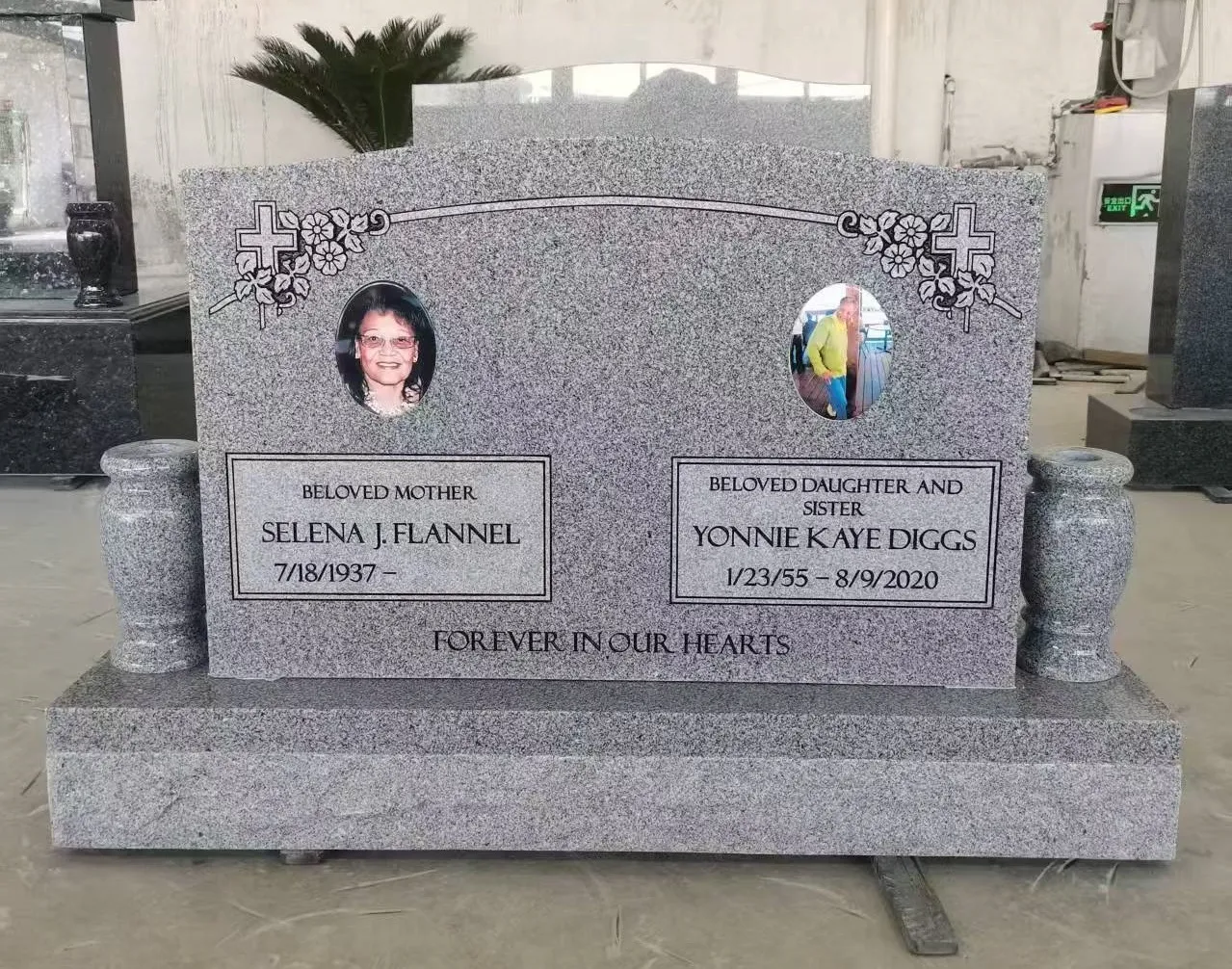
How do you choose lettering for a granite monument?
Choose lettering that customers can read easily on the finished stone. Check the whole inscription—not just the font name—including spelling, dates, accents, spacing and line breaks. Review it at the intended size. If another name may be added later, leave enough space and keep the approved artwork.
Turn a font choice into a production brief
| Decision | What to check | What to retain |
|---|---|---|
| Type style and detail | Can thin strokes and enclosed spaces be reproduced by the chosen method? | Outlined vector artwork and any approved sample reference |
| Finished letter size | Is the actual inscription readable at its intended viewing distance? | Letter height and usable inscription area on the drawing |
| Spacing and hierarchy | Do the family name, personal names and dates fit without crowding? | Approved line breaks, alignment and spacing |
| Stone and finish | Does the lettering remain clear on the proposed color, grain and surface? | Material-lot or sample reference and finish details |
| Language and symbols | Are accents, punctuation, reading direction and requested emblems correct? | Editable source text and the customer's signed proof |
| Future additions | Is space reserved, and can another engraver identify the lettering? | Production artwork, dimensions and process notes |
Why a screen proof is only part of the approval
A screen proof answers questions about wording and arrangement. It does not demonstrate the appearance of a cut stroke, the edge of a sandblasted letter or the contrast of a portrait on the selected granite. Review the layout at the proposed finished size; where the process or detail is unfamiliar, ask for a representative sample using the proposed material and method.
For a sample review, include the hardest details in the actual inscription: fine strokes, closely spaced letters, small dates and punctuation. Record the sample identity and viewing conditions. Do not substitute an unrelated large-letter demonstration for the small lettering that will appear on the order. Our laser etching and sandblasting comparison explains the different production choices.
A workshop example: review the complete lettering field
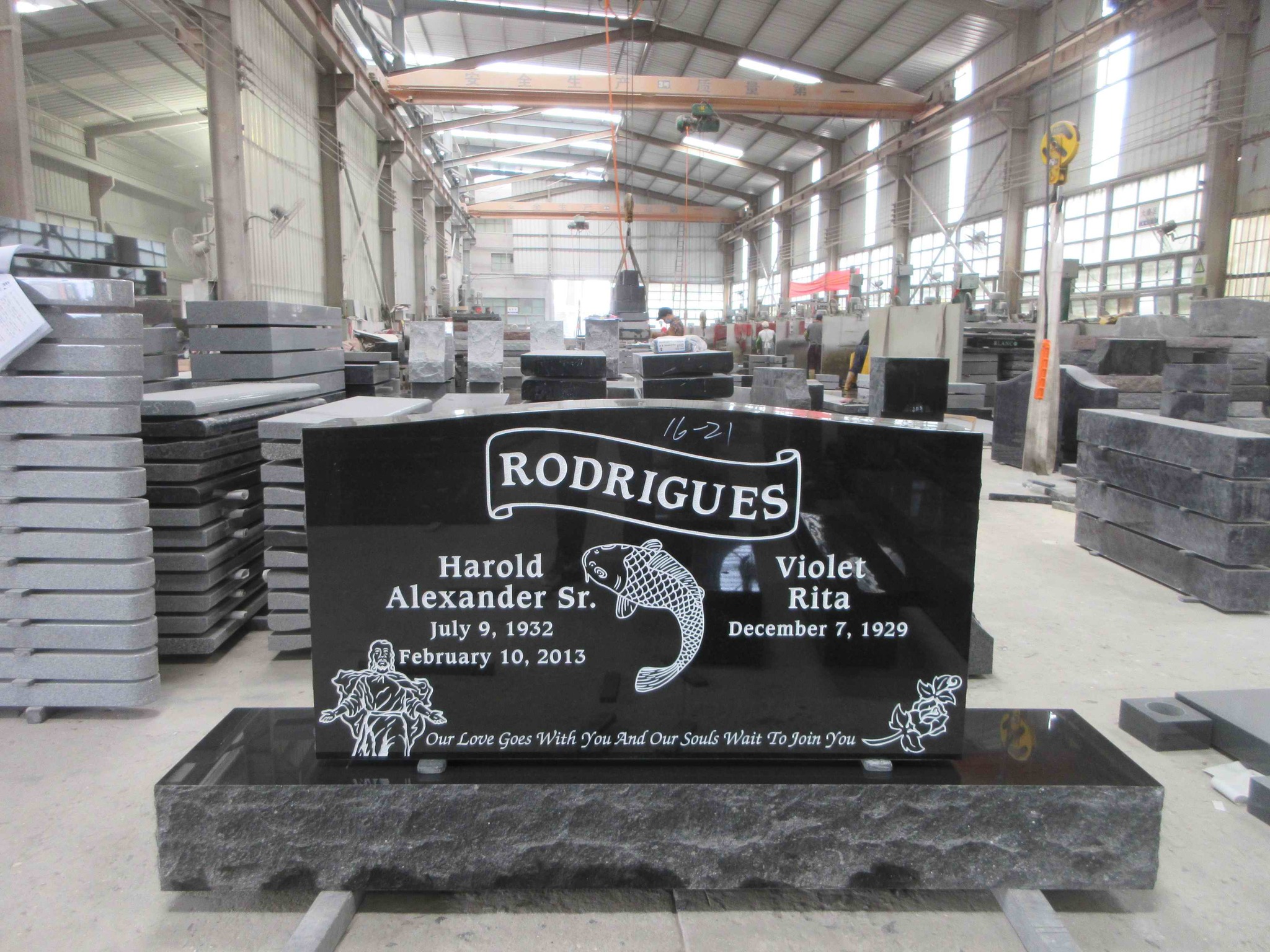
Review the smallest text as well as the family name. Check the relationship between lettering, artwork, the base and the usable polished area. Where a second inscription is planned, show its reserved position on the drawing instead of relying on a verbal instruction.
Five checks before approving the inscription
- Confirm the text. Obtain editable wording from the authorized customer and verify spelling, dates, accents and punctuation.
- Confirm the available area. Mark the lettering field, artwork boundaries and any space for future additions on the approval drawing.
- Confirm the process. Specify the lettering method, required appearance and any color treatment with the stone and finish.
- Approve the right evidence. Use a final-size layout and, when needed, an identified production sample. Record changes under a new revision.
- Release one version. Keep the approved proof with the order; withdraw superseded files from the production instructions.
Keep a handover file for future inscriptions
Save both editable text and production artwork. A font name alone may be insufficient because different versions, manual spacing and modified letters can change the finished appearance. Retain outlined artwork, letter heights, layout dimensions, carving or engraving method, finish and color-treatment notes, the approval date and clear photographs. Share the permitted files with the future engraver, subject to any font or artwork licence.
For an existing memorial whose original files are unavailable, ask the engraver to assess the lettering before promising an exact match. Photographs help establish the appearance, but dimensions and a site or sample review may still be necessary.
Check the cemetery or memorial program separately
Obtain the current requirements for the specific cemetery and plot before cutting. Government-furnished VA headstones and markers follow their own inscription guidance; those rules are not a universal font standard for private commercial monuments. The factory proof and the cemetery's written approval should refer to the same design revision.
Frequently Asked Questions
Which font is best for a granite monument?
Choose a typeface that works at the approved size with the selected stone and engraving method. Evaluate the complete inscription, including its smallest characters, and use a representative stone sample when the details are unfamiliar.
Can a buyer send text without artwork?
Yes, editable text can start the design process. Production should wait for approved artwork showing the final wording, line breaks, letter sizes and placement. A screen proof does not replace a stone sample when the finish or engraving result needs confirmation.
Who approves spelling and dates?
The buyer or authorized customer representative should approve the final inscription proof in writing. Keep the approved revision with the order and obtain a new approval whenever wording, dates or layout change.
Sources and further reading
In Fonts Are Important!, published in MBNews in April 2021, Heather Sturgill discusses lettering with memorial designer Jed Hendrickson. Their discussion highlights two practical problems: a font that looks acceptable on paper may not translate well into stone, and an unusual letterform can be difficult to match when another inscription is added later. See the article reference below.
For an importer, the useful next step is to make both issues part of the approval file. Ask how the proposed lettering will be produced now, and what files a future engraver would need. The checklist below is Boda Stone's buyer guidance; it is not an MBNA specification or an association approval of an individual design.
Sources and editorial update
- Heather Sturgill, AICA, Sears Monument Co., Fonts Are Important!, MBNews, April 2021, pp. 10–13, including comments from Jed Hendrickson, CM, AICA. Historical professional discussion of font selection and future matching; not a current technical standard. Publisher's magazine archive.
- VA — Headstone and Marker Inscriptions: requirements for the specified government program.
- Boda Stone — Rodrigues project record: source of the workshop photograph; not evidence of a comparative font test.
Updated October 5, 2026. Check the current requirements for your destination and order.